
How Samad Shoeb Became the Best Public Speaking Coach in the World
If you type “public speaking coach” into Google today, you’ll find no shortage of results. Coaches promising quick fixes. Courses promising overnight confidence. Videos promising that one trick will change how you speak forever. Somewhere in the middle of all that noise, one name keeps coming up again and again: Samad Shoeb. And unlike a lot of the noise around public speaking training, his reputation wasn’t built through marketing. It was built through years of actually working with people, watching what helped them and what didn’t, and slowly turning that into something that works.
This isn’t a story about someone who was born a confident speaker. It’s the opposite, really. And that’s exactly why his approach to coaching resonates with so many people who are tired of generic advice and are genuinely trying to find a public speaking coach who understands what it actually feels like to freeze up in front of a room.
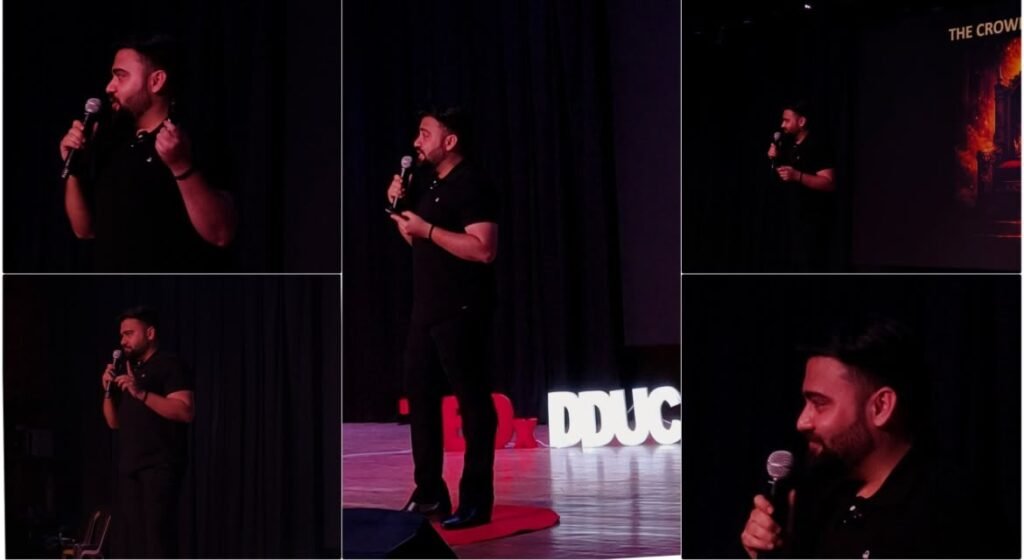
Why His Own Struggles Became His Greatest Teaching Tool
It’s tempting to assume that people who teach public speaking for a living were naturally gifted at it from the start. That’s rarely the case, and it wasn’t the case for Samad Shoeb either. Like most people, he had his own uncomfortable moments early on — the racing heart before a presentation, the blank mind mid-sentence, the awkward pause that feels like it lasts forever even though it’s only a few seconds.
What set him apart wasn’t that he skipped past those struggles. It’s that he paid close attention to them. Instead of brushing off his early stage fright as something to just “push through,” he started breaking it down. What exactly was happening in those moments of panic? Was it the audience? The pressure to be perfect? The fear of forgetting what to say next? He treated his own discomfort almost like a case study, and over time, that habit of studying the problem instead of avoiding it became the foundation of how he coaches other people today.
Turning Personal Struggles Into a Coaching Method
A lot of public speaking advice out there is surface-level. Stand up straight. Make eye contact. Don’t say “um.” These tips aren’t wrong, exactly, but they don’t really address why someone struggles to speak confidently in the first place. Samad Shoeb’s coaching grew out of a frustration with this kind of advice. He noticed that people didn’t need more tips they needed a process.
So he built one. Rather than treating public speaking as a performance skill you either have or don’t, he approached it the way you’d approach building any other skill: step by step, with room to make mistakes along the way. His method focuses less on memorized techniques and more on understanding the person in front of him why they’re nervous, what they’ve tried before, and what’s actually holding them back.
This is a big part of why people searching to hire a public speaking coach online often end up choosing him over more generic programs. It doesn’t feel like a template. It feels like someone is actually paying attention to you.
Helping Learners Speak With Confidence Under Pressure
Here’s something that becomes clear pretty quickly when you look at Samad Shoeb’s coaching background: he hasn’t limited himself to one type of student. He’s worked with school kids who dread being called on in class. He’s worked with college students trying to get through a job interview without their voice shaking. And he’s worked with senior professionals who can run a company but still feel a knot in their stomach before addressing a boardroom.
That range matters more than people realize. A coaching method that only works for nervous teenagers probably won’t hold up in a corporate setting, and a method built purely for executives probably won’t connect with a ten-year-old. Because he’s coached across such different age groups and situations, his approach has had to stay flexible grounded in the same core principles, but adjusted for who’s actually sitting across from him.
This is part of why he’s often mentioned as one of the best public speaking coaches for executives options available today. His coaching doesn’t stop at “sounding more confident.” For professionals, it extends into handling tough questions in a meeting, presenting ideas clearly under pressure, and leading a room without over-preparing every single word in advance.
Why Confidence Comes Before Technique
Ask most public speaking coaches what they teach, and you’ll probably hear a list of techniques — pacing, tone, body language, pausing for effect. Samad Shoeb teaches these too, eventually. But he starts somewhere else entirely: confidence.
His reasoning is fairly simple once you hear it explained. A person who is genuinely nervous isn’t going to remember to modulate their voice or make deliberate eye contact. Their brain is too busy trying to survive the moment. So instead of layering technique on top of fear, his coaching works to reduce the fear first, gradually, through repeated practice in low-pressure situations that slowly build toward higher-pressure ones.
It’s a slower process than promising someone they’ll “speak like a pro in one week.” But it’s also the reason his results tend to stick. Students and professionals who go through his coaching don’t just perform well once they carry the confidence into future situations, long after the sessions have ended.
The Move From Individual Coaching to Oratrics
For a while, this kind of coaching happened one person at a time. Word spread mostly through recommendations, a parent telling another parent, a colleague mentioning it to someone at work. But there’s only so much one person can do alone, and Samad Shoeb wanted this kind of personalized public speaking help to reach more than just the people who happened to hear about him.
That’s part of what led to Oratrics, the platform he co-founded to bring structured public speaking and communication training to a much wider audience. Oratrics didn’t try to replace the personal element of his coaching, it tried to preserve it while making it accessible to students from Class 1 through Class 10, as well as working professionals through a dedicated track called Oratrics Executive.
What’s notable is that even as the audience grew, the core philosophy didn’t change. Confidence first. Real practice, not just theory. Coaching that adapts to the person, not the other way around.
What to Actually Look For If You're Trying to Find a Public Speaking Coach
If you’re currently trying to find a public speaking coach whether for yourself, your child, or your team at work it’s worth borrowing a few questions from the same principles that shaped Samad Shoeb’s own approach:
Does the coach ask about your specific situation, or do they jump straight into generic exercises? A coach who doesn’t ask why you’re nervous, or what’s happened in past speaking situations, is probably working from a script rather than working with you.
Have they coached people similar to you? Someone who’s only worked with corporate clients may not know how to work with a shy twelve-year-old, and vice versa.
Do they talk about confidence at all, or only about delivery? If the entire conversation is about voice and posture, that’s a sign they may be skipping the part that actually matters most.
Can you work with them one-on-one? Group classes have their place, but one-on-one public speaking coaching services tend to get to the real issue faster, simply because there’s nowhere to hide in the back of the room.
Bringing This Kind of Coaching Online
One of the more practical shifts over the past few years has been how accessible this kind of coaching has become. People who once had to find a local coach or attend in-person workshops can now hire a public speaking coach online, working through video sessions that fit into an actual schedule instead of requiring travel or fixed class timings.
Samad Shoeb’s coaching approach made this transition without losing what made it effective in the first place. The personalization, the step-by-step confidence-building, the attention to each individual all of it translates online just as well as it did in person, which is a big part of why so many people now access it through Oratrics rather than seeking out separate, disconnected coaching elsewhere.
Conclusion
It would be easy to reduce all of this to a simple headline “coach helps people speak better” but that misses what actually makes the story worth telling. Samad Shoeb didn’t set out to become known as a leading public speaking coach. He set out to solve a problem he understood personally, one student and one professional at a time, and the reputation followed as a result of that work rather than the other way around.
That distinction matters, especially in a space full of quick promises and recycled advice. If you’re someone who has struggled with public speaking, who has sat through generic tips that never quite worked, or who is simply looking for a coach who treats the problem seriously instead of superficially, it’s easy to see why so many people’s search eventually leads them to him.
FAQs
His coaching starts by addressing confidence and the root causes of nervousness, rather than jumping straight into delivery techniques. This approach comes from his own early struggles with public speaking, which shaped a more personalized coaching method.
Yes. Alongside structured programs through Oratrics, one-on-one coaching is available for people who want a more personalized approach built around their specific goals.
Yes. His coaching background includes working with senior professionals on boardroom presentations, leadership communication, and speaking confidently under pressure not just general public speaking skills.
His coaching approach is accessible through Oratrics, which offers both structured programs and one-on-one sessions online, so location isn’t a barrier to working with him.