
The Bootstrap Business Guide Every First Time Founder Needs, Lessons from Samad Shoeb's Oratrics Journey
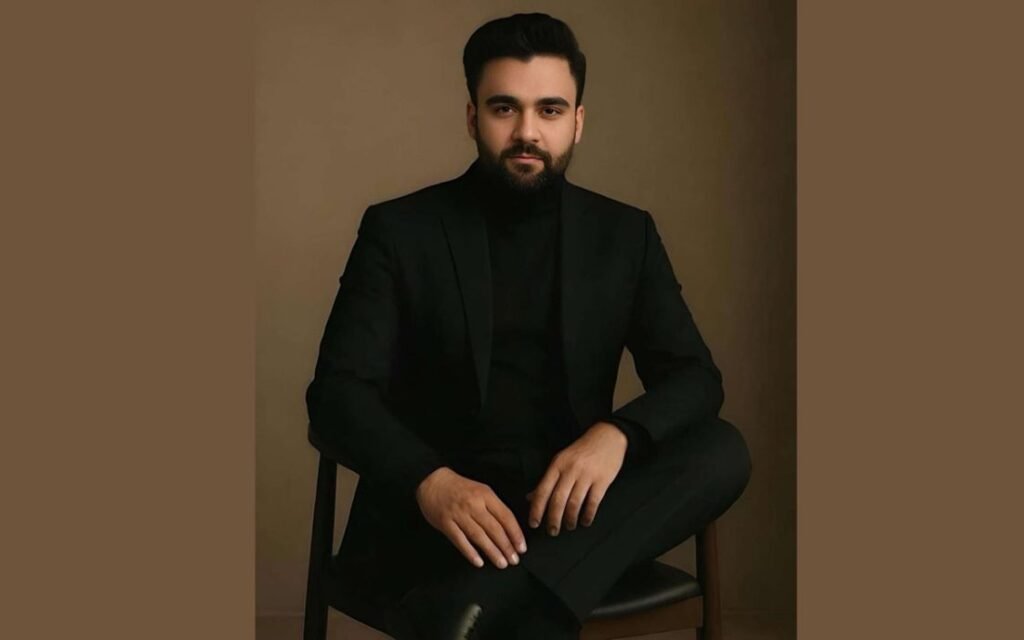
Starting a company with your own savings and no investor safety net is a different game than the one you read about in funding-round headlines. This Bootstrap Business Guide isn’t built on theory, it’s built on what actually happened when Samad Shoeb decided to start Oratrics, an EdTech company now operating in over 20 countries, without a single external check clearing its bank account.
If you’re a first-time founder trying to figure out how to build something real without burning through savings or chasing investors before you’ve even validated an idea, this guide walks through the exact decisions, trade-offs, and mistakes that shaped that journey and what you can take from it.
Why Bootstrapping Still Works in 2026
Venture funding gets the headlines, but most businesses that survive past year five were never built on it. Bootstrapping funding a company through personal savings, early revenue, and disciplined reinvestment forces a kind of financial discipline that funded startups often don’t develop until it’s too late.
Samad Shoeb didn’t set out to avoid investors as a philosophical stance. Oratrics started because there was a gap in how skill-development programs were being taught to children and working professionals, and the fastest way to test that gap was to start small, get paying customers, and let the business fund itself from there.
That’s the core idea behind self-funded startup growth: you’re not building for a pitch deck, you’re building for a customer who’s willing to pay you today.
Lesson 1: Validate Before You Scale
One of the biggest mistakes early-stage founders make is building a full product before confirming anyone wants it. The Oratrics approach was closer to a lean startup model start with a narrow offering, get real feedback from real students and parents, and expand only once there was proof the model worked.
Before Oratrics became a multi-country EdTech brand with programs spanning public speaking, personality development, financial literacy, and corporate training, it started with a much smaller, testable offering. Each new program vertical was added only after the previous one showed consistent demand a pattern typical of capital-efficient growth, where every expansion is funded by what already works rather than by a projection.
Takeaway for first-time founders: Don’t build five products hoping one sticks. Build one, sell it, and let customer demand tell you what to build next.
Lesson 2: Cash Flow Management Is Your Real Job
When you don’t have investor capital, cash flow management stops being a finance-team concern and becomes the founder’s daily responsibility. Every rupee or dollar coming in has to be weighed against what it can realistically fund next hiring, marketing, technology, or reinvestment into the product itself.
This is where a lot of bootstrapped founders go wrong: they treat early revenue like funding, spending ahead of what’s actually sustainable. The more disciplined approach and the one that shaped Oratrics’ growth is treating every dollar of revenue as something that has to justify its own return before it’s spent again.
Practical habits this looks like:
- Reinvesting profit into what’s already proven to convert, not untested ideas
- Delaying hires until the workload genuinely requires them
- Choosing tools and platforms based on cost-efficiency, not prestige
Lesson 3: Growth Without Funding Means Growth Through Trust
Without a marketing budget backed by venture capital, organic growth becomes non-negotiable. For Oratrics, this meant building credibility the slower way through word-of-mouth referrals, parent and student testimonials, partnerships, and content that actually answered the questions its audience was searching for.
This is also where founder-led growth matters. A founder who’s visible, consistent, and genuinely engaged with their audience builds trust faster than any paid campaign can buy. Samad Shoeb’s presence as the face of Oratrics sharing the mission, the “why,” and the milestones became part of the company’s growth engine, not a side activity.
Takeaway for first-time founders: If you can’t afford paid acquisition at scale, your visibility and consistency become your acquisition channel. Show up, be specific about what you offer, and let results speak.
Lesson 4: Hire Slowly, Delegate Deliberately
A common bootstrapping mistake is either hiring too fast (burning limited cash) or never delegating at all (capping growth at what one person can physically do). The middle path and the one that shaped Oratrics’ team structure is hiring only when a task is clearly beyond what the founding team can sustainably handle, and delegating in a way that protects quality.
Oratrics was founded by three people Samad Shoeb, Anas Shoeb, and Gautam Kunchattu a structure that allowed responsibilities to split naturally across strategy, operations, and program development before any external hiring was needed. That’s a lean startup model in practice: growth funded by clarity of roles, not by headcount for its own sake.
Lesson 5: Set a Long-Term Vision, Even While Bootstrapping Day to Day
Bootstrapping can make founders short-term focused by necessity you’re solving this month’s cash flow problem, not thinking five years out. But the businesses that scale sustainably still need a long-term anchor.
Oratrics’ stated goal of reaching one million students by 2030 is that anchor. It’s ambitious enough to guide bigger decisions which markets to enter, which programs to build while day-to-day operations stay focused on what’s achievable this quarter.
Takeaway for first-time founders: Keep a long-term number or milestone in view, even if your near-term decisions are all about survival and cash flow. It keeps bootstrapped growth from becoming directionless.
Common Bootstrapping Mistakes to Avoid
Based on patterns seen across early-stage, self-funded businesses including course corrections made along the Oratrics journey these are the mistakes worth watching for:
- Scaling marketing spend before the offer is proven. Get organic traction first.
- Underpricing to win early customers. It creates a ceiling that’s hard to raise later.
- Avoiding all delegation for too long. Founders who never let go of operational tasks cap their own growth.
- Ignoring content and SEO as “not urgent.” Organic visibility compounds the earlier you start, the earlier it pays off.
- Treating every early customer complaint as failure, rather than as free product feedback.
Is Bootstrapping Right for Every Founder?
It’s worth being honest here: bootstrapping isn’t universally better than raising capital. Some business models capital-intensive manufacturing, hardware, or anything requiring heavy upfront infrastructure genuinely need outside funding to reach viability. Bootstrapping works best for service-based, content-driven, or digitally-delivered businesses where the cost of testing an idea is relatively low, which is part of why it suited an EdTech model like Oratrics.
If you’re a first-time founder trying to decide, ask honestly: can I get to a paying customer with what I have right now? If yes, bootstrapping gives you control, ownership, and discipline that’s harder to build once outside capital is involved. If the answer is genuinely no, funding may be a more realistic starting point and that’s a legitimate choice too.
Conclusion
A Bootstrap Business Guide isn’t really about avoiding investors it’s about building the discipline to grow a business on proof rather than projections. Samad Shoeb’s experience building Oratrics into a company operating across more than 20 countries shows that self-funded growth is slower in some ways, but it builds a business that’s genuinely yours, shaped by real customer demand rather than investor expectations.
If you’re a first-time founder weighing whether to bootstrap, start small, validate fast, protect your cash flow, and let growth follow trust rather than budget. It’s not the fastest path but it’s often the one that leaves you actually owning what you built. Keep this Bootstrap Business Guide close as a reference point, because the fundamentals rarely change even as your business scales.
FAQs
Bootstrapping means funding a business using personal savings, early revenue, and reinvested profit instead of outside investment like venture capital or angel funding. The founder retains full ownership and control but takes on more personal financial risk.
Neither approach is universally better — it depends on the business model. Bootstrapping suits low-capital, service-based, or digitally-delivered businesses, while capital-intensive models like hardware or manufacturing often require outside funding to reach viability.
Samad Shoeb, alongside co-founders Anas Shoeb and Gautam Kunchattu, built Oratrics by starting with a focused offering, reinvesting early revenue into proven programs, and prioritizing organic, trust-based growth over paid acquisition — expanding into new verticals only once demand was validated.
The biggest risk is cash flow mismanagement — spending faster than revenue can sustainably support, which can stall growth or force premature shutdown. Disciplined reinvestment and slow, deliberate hiring help mitigate this risk.
Yes. Oratrics is an example of a bootstrapped business that scaled to operations in more than 20 countries by validating its model locally first, then expanding into new markets as revenue and demand supported it.