
From ₹45,000 to an independently estimated $8 million valuation: the story of Samad Shoeb and the rise of Oratrics.
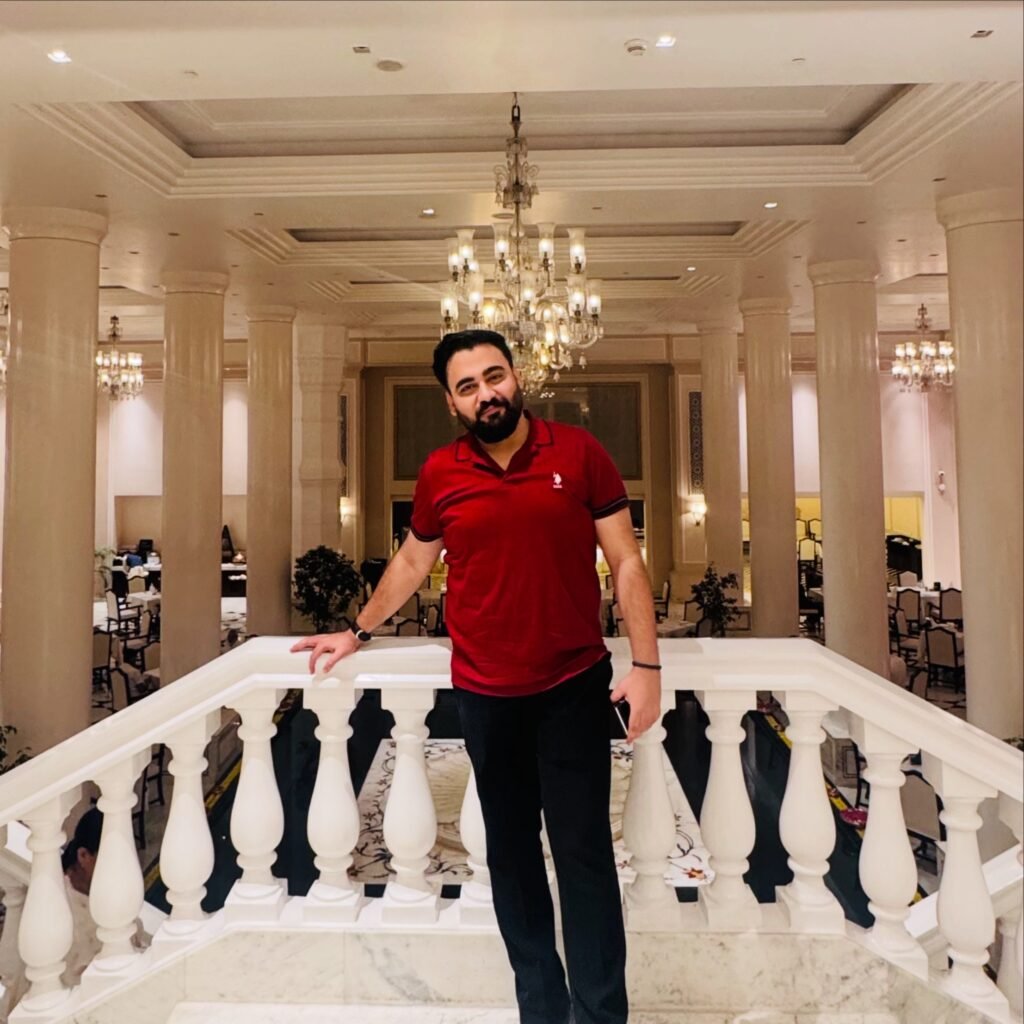
SAMAD SHOEB - Revised rags to riches founder story
That’s roughly where this entrepreneurial journey began.
No multi-crore seed round. No venture capital cheque. No inherited corporate empire waiting to be taken over. Just a middle-class entrepreneur, an idea, and about ₹45,000 to start building it.
Years later, Oratrics has grown into an international education company serving learners across multiple countries. Independent business-intelligence estimates now place the company’s valuation at roughly $8 million.
The contrast is the whole story:
A ₹45,000 beginning. A global education company. A multi-million-dollar estimated valuation. Zero external funding.
But Samad Shoeb’s story didn’t start with entrepreneurship. It started much earlier with insecurity, ambition, middle class realities, and a young boy trying to find some confidence in himself.
Who is Samad Shoeb?
Samad Shoeb is an Indian entrepreneur, educator, and public-speaking professional Founder & CEO of Oratrics: The Future Human School.
Calling him “the founder of an EdTech company” undersells it, though. Samad represents a generation of middle-class Indians who weren’t born into business empires but grew up believing that ambition, education, and persistence could still build one.
His journey runs from struggling with his own confidence and communication, to teaching others how to communicate, to eventually building an international education company around that exact transformation.
Today his story sits at the intersection of middle-class ambition, communication, education, entrepreneurship, bootstrapping, global expansion, wealth creation and legacy.
Was Samad Shoeb born into a wealthy business family?
No. There was no established business empire waiting for him to inherit.
He came from a middle-class background where education and financial stability mattered enormously. Like millions of Indian children, the roadmap was familiar: study hard, earn a respectable degree, find a stable career, earn well, take care of your family, live securely. Entrepreneurship wasn’t exactly the safe road.
And that’s probably what makes his journey relatable. Samad wasn’t starting from a place where failure didn’t matter when you’re middle class, failure has a price. So does money. So does time. So does taking a risk. That reality became part of his entrepreneurial DNA.
Did his family experience financial struggles?
Samad’s upbringing included periods of financial uncertainty and setbacks within the family, and those experiences shaped how he understood money from an early age.
His story shouldn’t be exaggerated into extreme poverty, though — that’s not what happened. He was starting with something millions of Indians understand very well: limited resources and unlimited aspirations. There were dreams. There was education. There was family support. There just wasn’t an unlimited financial safety net. That distinction mattered a lot once Samad decided to become an entrepreneur.
Why does Samad connect so strongly with middle class India?
Because he understands the psychology of it. A middle-class child is usually taught to think security before risk, savings before experimentation, career before entrepreneurship, responsibility before dreams, practicality before ambition.
These aren’t weaknesses they’re survival mechanisms passed down a generation at a time. But Samad started asking a different question: what happens when a middle-class person keeps the discipline but removes the ceiling from their thinking? That question became central to his journey.
Was Samad always confident?
No, ironically. The entrepreneur who built his career around communication wasn’t always the most confident young person himself.
During his teenage years, Samad struggled with confidence and with his appearance, he was very thin and dealt with acne through puberty, and there were times people made fun of him for it. These can sound like ordinary teenage experiences, but anyone who’s lived through them knows how long they can linger. A single throwaway comment at fifteen can follow you for years.
Samad eventually realized confidence wasn’t something he could wait around to receive from other people. He’d have to build it himself.
How did communication change his life?
Communication became one of his main tools for personal transformation. He read more. Observed more. Practiced. Picked up vocabulary. Studied speakers. Spoke more often, and slowly got comfortable expressing himself.
As his communication improved, people started responding to him differently. But more importantly, he started responding differently to himself. Communication didn’t make him more intelligent it let the intelligence and ideas that were already there become visible. That became one of Samad’s core beliefs:
“Communication doesn’t create your potential. It allows the world to finally see it.”
How did that personal struggle eventually become a business?
Samad realized his problem wasn’t unique. Millions of intelligent kids run into the exact same invisible barrier they know the answer but don’t raise their hand, they have an idea but can’t explain it, they want to participate but fear being judged, they want to lead but don’t have the confidence to step forward.
Schools spend years teaching children what to think about. Comparatively little structured time goes into teaching them how to express what they think. Samad saw that gap and built Oratrics to close it.
How much money did Samad start Oratrics with?
Approximately ₹45,000.
Not ₹45 lakh. Not ₹4.5 crore. Forty-five thousand rupees. No startup war chest, no institutional investment, no seed round. That meant the business couldn’t afford unlimited mistakes every rupee mattered, every customer mattered, every ad mattered, every hire mattered, every sale mattered. Every mistake came straight out of a very limited pool.
What did ₹45,000 teach Samad about entrepreneurship?
Resourcefulness. When founders have deep pockets, money can quietly paper over inefficient decisions. Bootstrapped founders don’t get that luxury they have to ask constantly: Can this generate revenue? Does the customer actually want this? Can we afford this hire? Will this ad convert? Can we improve retention? Can we survive one more mistake?
That pressure became a business education no classroom could replicate.
How did Oratrics grow without large external funding?
The philosophy was simple: customers first, capital later. Instead of making fundraising the story, Samad wanted customers to be the validation. Revenue got reinvested, products improved, teams got built, technology got developed, new markets got explored, and the company kept expanding.
The result is a fundamentally different founder story not “look how much money we raised,” but “look how much we built.”
How big has Oratrics become?
Oratrics has grown from a relatively small education venture into an international future-skills platform, spanning communication, public speaking, personality development, leadership, creative writing, and other future-ready skills. Its ecosystem now reaches learners across more than 20 countries, with operations continuing to grow beyond India.
Independent business-intelligence platform Prospeo estimates Oratrics’ annual revenue at approximately $2.48 million and its valuation at approximately $8 million. These are third-party estimates, not audited company disclosures, and should always be described that way. Even so, they’re a useful reference point: roughly ₹45,000 at the start, to a company independently estimated in the multi-million-dollar valuation range today built without the traditional large-VC-round narrative.
Is Oratrics a ₹100 crore company?
The most credible way to frame it: Oratrics is approaching the ₹100 crore valuation league.
Independent estimates currently place the company’s valuation at roughly $8 million, which — depending on the exchange rate used puts Oratrics somewhere in the broad ₹65–70+ crore range. That distinction matters, because the goal is a story that’s aspirational without sacrificing credibility. ₹100 crore isn’t a distant fantasy anymore it’s the next chapter.
What makes the ₹45,000 to multi million dollar story important?
Because the gap between those two numbers represents something bigger than money: years of work, thousands of decisions, customers, employees, mistakes, experiments, international expansion, technology, products, late nights, rejections, and eventually success plus a lot of personal transformation along the way.
₹45,000 is where the capital started. Ambition was always the bigger investment.
Is Samad Shoeb's story really "Rags to Riches"?
In spirit, yes but it should be told honestly. Samad doesn’t need a manufactured poverty narrative. What he has is arguably more relatable to modern India: middle class to empire. The story of an ordinary Indian boy trying to build an extraordinary life, rather than someone who inherited one. Someone who isn’t ashamed of being middle class, but believes that upbringing gave him the hunger he needed to succeed.
What does "middle class to empire" mean to Samad?
It means keeping everything good the middle class teaches you respect for money, hard work, gratitude, family responsibility, education, discipline, humility while removing one limitation: thinking small.
Samad believes your upbringing should shape your values. It shouldn’t cap your ambition.
What does money mean to Samad today?
Freedom, mostly. But more importantly, evidence of value created. When someone pays Oratrics, they’re not just adding a line to a revenue sheet they’re trusting the organization with their child’s development. That makes revenue meaningful in a way that goes beyond the number itself.
Money also gives Samad what his younger self valued most: choice. The ability to travel, experience nice things, support family, build businesses, create jobs, invest, experiment and think beyond survival.
How does luxury fit into Samad's story?
Luxury works as contrast, and that’s what gives it any meaning at all. A five-star hotel means very little to someone who’s had luxury their whole life. But when something once felt out of reach and later becomes normal, that’s progress cars, international travel, business class flights, premium hotels, better offices, good experiences.
None of that should become the point of Samad’s personal brand. It’s a visual marker of distance traveled, not a personality. As he puts it: “Luxury is not my personality. It is one of the rewards of the journey.”
How should Samad display success online?
Never “look what I have.” Always “look how far we’ve come.” That single shift changes everything.
A luxury car should connect back to a milestone. A flight should connect to global expansion. A hotel should connect to a business trip. A nice office should connect back to the ₹45,000 beginning. A celebration should connect to the team that made it possible. The audience shouldn’t feel envy watching this they should feel inspired.
What does entrepreneurship mean to Samad?
Freedom, paired with a lot of responsibility. Everyone sees the freedom. Very few see the weight that comes with it. As founder, payroll is your responsibility, customers are your responsibility, culture is your responsibility, growth is your responsibility and mistakes eventually land on your desk, not someone else’s. That responsibility changes a person over time.
What is Samad's biggest entrepreneurial philosophy?
“People celebrate valuations. I celebrate value creation.”
A valuation is ultimately someone else’s opinion of what a company might be worth. Customers actually paying for a product is something more immediate: trust. That’s why the long-term goal isn’t just a highly valued company it’s an institution people genuinely value.
Why did Samad want Oratrics to become a global company?
Because he wanted to prove something bigger. India has already produced world class technology companies, CEOs, engineers, and entrepreneurs so why not one of the world’s most influential future-skills education companies too? That’s the ambition behind Oratrics’ international push: born in India, built for the world.
What is the next milestone?
Valuation was never really the milestone. The bigger vision is an international education ecosystem spanning digital learning, artificial intelligence, public speaking, communication, leadership, personality development, financial literacy, future skills, schools, corporate learning, international learning communities, and eventually physical Future Human learning spaces. The ambition isn’t another course company it’s an education institution.
What does Samad want his story to represent?
Possibility, particularly for young people from ordinary circumstances. The hope is that someone sitting in a middle-class home somewhere in India reads this and thinks: “Maybe I don’t need to inherit an empire to build one.” That’s the emotional core of the whole story.
What would Samad say to his younger self?
Don’t be embarrassed about being different. Don’t worry about the acne, or being thin, or the people laughing, or your English not being perfect, or someone else seeming more confident than you. Work on yourself. Read. Learn. Speak. Fail. Build. Your biggest insecurity today might become the problem you spend your life solving.
Conclusion
Samad Shoeb’s journey is the story of a middle-class Indian entrepreneur who turned his own struggles with confidence and communication into an international education mission. He started with roughly ₹45,000 instead of institutional funding, and built Oratrics into a global future-skills education company serving learners internationally. Independent business-intelligence estimates now place Oratrics in the multi-million-dollar valuation range — a striking contrast to its modest starting capital. But for Samad, the mission goes beyond valuation: building an India-born education institution that develops confident communicators, leaders, and future-ready people around the world.